This article summarizes an event hosted by the Global Grassroots Support Network (GGSN) and Climate Activist Defenders (CAD), How do we keep each other safe? A peer exchange, held on the 14th of April, 2026. The content reflects what was discussed by participants.
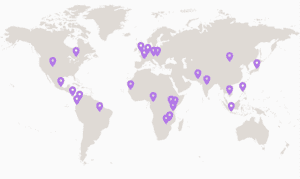
Approximately 53 participants came from the following countries: Kenya, Uganda, Cameroon, Sénégal, Tanzania, Zimbabwe, Malawi, India, the Philippines, Indonesia, Japan, Mongolia, Cambodia, Afghanistan, Mexico, Colombia, Brazil, Panama, Canada, the USA, UK, France, Germany, Austria & Slovakia
What security/safety challenges are grassroots activists most struggling with?
Increased surveillance
- Government surveillance and control using cameras and AI.
- Social media is controlled and being used to monitor citizens.
- Cctv cameras to surveil protestors, facial recognition cameras.
- Police use footage and search social media to track and find activists.
- Using Israeli softwares and tactics for surveillance.
- China is the primary aggressor to countries in South East Asia.
This resource includes information on surveillance tools and reducing risk: https://www.eff.org/pages/tools
CANVAS is an organization focused on strategies for activists to manage authoritarian uses of AI: https://canvasopedia.org/activist-intelligence/
Censorship and control of media
- Passing authoritarian censorship laws, terror laws to silence dissent & centralizing power.
- Control of the media, such as changing existing laws to make investigative journalism difficult.
- Threat on the citizenship and the right to vote of activists.
- Restrictions on the movements of activists who denounce poor governance, social injustices, reprisals, and violations of the law.
- Online attack and harassment.
- Civil spaces shrinking; more difficult to find ways to organize and campaign.
Targeting activists/organizations credibility
- Restricting NGOs foreign funding.
- Closing NGOs if considered ‘threat to security’, targeting organizations as ‘terrorists’.
- Smearing protestors as ‘foreign agents’ – to delegitimize dissenting voices.
- E.g. Anti-NGO discourses, smear campaign against human rights defenders.
- E.g. Indigenous land defenders labelled as terrorists and surveilled for defending their territory.
Arrests
- Arbitrary arrest and unlawful imprisonment of the activists/organizers.
- Use of terror laws to jail dissenting voices and conflating dissent with acts of terrorism.
- Activists are imprisoned without bail for years on end.
Extreme violence
- Activists are facing physical harm and loss of life at hands of police.
- Enforced disappearance & kidnapping of the activists.
What are activists doing to manage these risks?
- Finding a balance between security and political impact. Too much security can weaker membership engagement and create an alarmist effect, too much openness weakens security and creates vulnerability.
- Building a security culture; a culture of always assessing risks. Scenario building and situation awareness training can help to develop this.
- Collectively crafting security protocols to build trust in the community and improve the localization of protocols.
- Using secure apps for digital security. Note: apps aren’t helpful if people don’t know how to use them securely. Only adding members to the signal group if they’ve been vetted by 3 other people. Holding sensitive conversations in person (outside of devices) where possible.
- Integrating emotional care for members, especially those managing high risk situations. Encouraging cultures of collective care, rather than leaving traumatized/harmed members to manage on their own. Rotating high risk roles to prevent burnout and level risk.
- During protests, documenting everything. Ensuring their is legal backup for protestors. Elder and faith communities participation as protection due to privilege (reducing violence towards more marginalized community members). Using the buddy system (making sure everyone who attends is paired up with someone to keep track of one another’s safety).
- Group solidarity during situations like arrests; sharing with global comrades to amplify and increase International attention and pressure.
- Avoiding glorifying risk taking.
Resources on safety and security
The following secure document contains a list of resources that include strategies and tips to improve safety and security. It includes:
- List of protection organizations
- Self-guided exercises, case studies and training recordings on holistic security and building a security culture
- Physical safety written resources
- Digital security written resources
- Media security written resources
- Capacity building written resources
- Security and protection grants
If you are a climate activist facing security challenges, consider reaching out to event co-host Climate Activist Defenders for security resources and support. Visit https://www.climateactivistdefenders.org/need-support.
